

Huanggang
Dabie Mountains & Hong’an Red Tourism Area
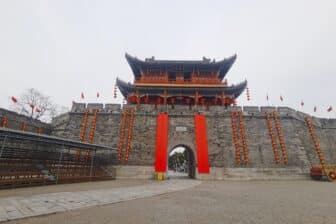
In northeastern Hubei, Huanggang stretches from the Dabie Mountains in the north to the Yangtze plains in the south, at the junction of Hubei, Henan and Anhui. The region combines a UNESCO Global Geopark, lush mid‑mountain landscapes and some of China’s most important “red tourism” sites, making it ideal for travellers interested in both nature and modern history.
Dabie Mountains of Huanggang – UNESCO Global Geopark
A key section of the Dabie range
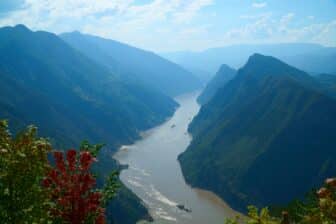
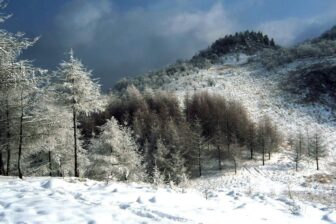
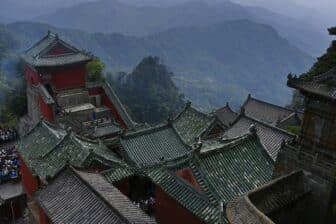
The Dabie Mountains of Huanggang form a major part of the Dabie range in northeastern Hubei and mark a transition zone between warm‑temperate and subtropical climates. In 2018, the Huanggang Dabie Mountains Geopark was officially recognised as a UNESCO Global Geopark, highlighting its outstanding metamorphic rocks, tectonic landforms and well‑preserved mid‑mountain scenery. The main peak, Tiantang Zhai (Heavenly Fortress), rises to about 1,729 m, earning it the nickname “No.1 Peak in Central China”.
Climate, water sources and eco‑tourism
The Dabie Mountains lie on the northern edge of China’s subtropical monsoon zone, with distinct north–south climatic features and pronounced mountain climate characteristics. They serve as a crucial water conservation area for the middle and lower reaches of the Yangtze River, with at least six major river systems, including the Jushui and Daoshui, originating here. The area has a humid subtropical mountain climate, with:
-
- four distinct seasons,
- an average annual temperature of around 16 °C,
- cool summers at higher elevations,
- mild winters,
- rainfall concentrated in spring and summer.
Combined with extensive forest cover, this makes the Dabie Mountains an excellent destination for eco‑tourism, hiking, summer retreats and nature photography.
Revolutionary culture in a mountain setting
Beyond its natural beauty, the Dabie range is also one of China’s key old revolutionary bases, historically known as the core of the E‑Yu‑Wan Soviet Area (Hubei–Henan–Anhui). Many villages and valleys preserve revolutionary sites, small museums and monuments, allowing visitors to combine mountain trekking with red history exploration.
Hong’an District – “China’s No.1 District of Generals”
Location, landscape and climate
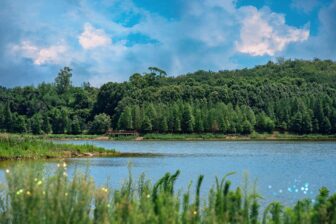
Hong’an District, under Huanggang City, lies on the southern slopes of the Dabie Mountains, straddling the border between Hubei and Henan. Formerly known as Huang’an, it was renamed Hong’an in 1952. The district covers around 1,796 km², including 1 township, 10 towns, one state farm and one administrative office. The terrain is higher in the north, lower in the south, made up mainly of hills and low mountains; the highest point is Laojun Mountain, at 840.5 m. Hong’an is rich in water resources, with about 100 rivers (including the Daoshui, Sheshui, and Jushui), plus more than 140 reservoirs and lakes, such as the Jinsha River and Xiangshan Lake.
The district has a continental subtropical monsoon climate with:
-
- four marked seasons,
- abundant rainfall and good sunshine,
- an average annual temperature of about 15.7 °C,
which makes it comfortable to visit in all seasons, particularly in spring and autumn.
By the end of 2024, Hong’an had about 618,800 registered residents, including 15 ethnic groups such as Han, Tujia and Zhuang, adding to its cultural diversity.
Scholars, culture and temples
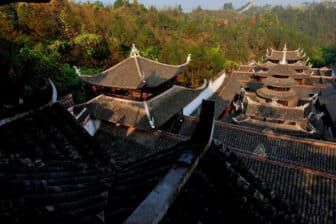
Founded in 1563, Hong’an has produced many scholars and officials, including the famous Song‑dynasty Neo‑Confucian philosophers Cheng Hao and Cheng Yi, key figures in the Lixue school, and the modern writer Ye Junjian. Cultural sites such as the Ancient Tiantai Chan Temple and the Wu Family Ancestral Hall, known as the “Treasure of Three Sculptures”, showcase traditional architecture, stone carvings and religious heritage in a serene rural setting.
Hong’an is best known as a major revolutionary base. The Huangma Uprising of 1927 in this area marked the start of coordinated revolutionary struggle across Hubei, Henan and Anhui. The district is the birthplace of the Fourth Red Army and the site where the 25th Red Army was reorganised and the 28th Red Army restructured. Around 140,000 men and women from Hong’an are said to have sacrificed their lives for the revolution, with 22,552 Revolutionary martyrs officially recorded, earning Hong’an the title “China’s No.1 District of Generals”. It produced two presidents of the PRC, Dong Biwu and Li Xiannian, and 61 founding generals, including Chen Xilian and Qin Jiwei.
Today, Hong’an is one of China’s twelve key red tourism zones, featuring:
-
- four national 4A scenic sites, including the Huangma Uprising and E‑Yu‑Wan Soviet Area Memorial Park and the Former Residence of Li Xiannian Memorial Park,
- eight national 3A attractions, spread across the district’s villages and mountain areas.
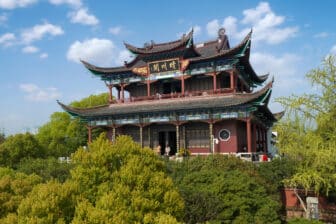
Together with natural landscapes like Tiantai Mountain and Jiuyan Mountain, and historic sites such as Tiantai Chan Temple and the Wu Ancestral Temple, Hong’an offers a deep immersion into both modern revolutionary history and older cultural traditions.