

Qingchuan Pavilion
A Classic Riverside View over the Yangtze
A historic pavilion facing Yellow Crane Tower
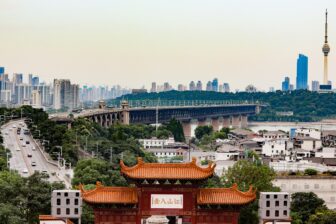
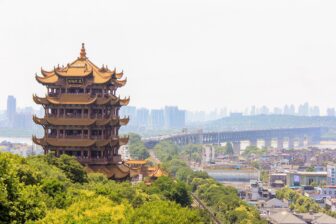
The Qingchuan Pavilion stands on Yugongji, at the eastern foot of Gui Mountain (Guishan) in Hanyang District, Wuhan, overlooking the Yangtze River and facing the Yellow Crane Tower on the opposite bank.
Together with Yellow Crane Tower and Guqin Terrace, Qingchuan Pavilion is praised as one of the “Three Great Scenic Wonders of Wuhan” and is honored with titles such as “First Scenic Spot of the Land of Chu” and “First Qingchuan Tower in Chu”. In 2013, it was designated as a National Key Cultural Relic Protection Unit.
From Ming dynasty origins to modern reconstruction
The pavilion was originally built between 1526 and 1529, during the Jiajing reign of the Ming dynasty, by Fan Zhizhen, the prefect of Hanyang, as part of the renovation of the Yuji Palace. Its name comes from a line in the poem “Yellow Crane Tower” by the Tang poet Cui Hao: “The trees of Qingchuan stand clear in Hanyang.”
After suffering multiple destructions, the site was rebuilt in 1984 based on late Qing dynasty photographs and reopened to the public in 1986, offering visitors a faithful reconstruction of a classic riverside pavilion.
Architecture and layout overlooking the Yangtze
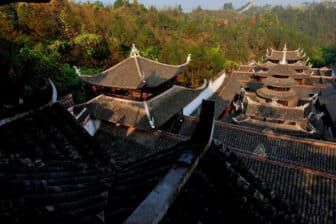
Qingchuan Pavilion covers a total scenic area of about 10,000 square meters, with the pavilion building itself occupying around 386 square meters. It features a double-eaved hip roof on two storeys, a granite base, red walls, vermilion pillars, and a reinforced-concrete structure mimicking traditional wooden architecture.
The ground floor spans five bays in width and four in depth, while the upper floor has three bays by two, creating elevated viewpoints over the Yangtze River, the Yellow Crane Tower, and the confluence of the Han River and the Yangtze.
The core of the scenic complex includes three main buildings:
-
- Qingchuan Pavilion,
- Yuji Palace (Dayu Temple),
- Tiemenguan Gate,
plus auxiliary structures like the Yu Stele Pavilion and Chaozong Pavilion, showcasing a mountain-terrace style rooted in Chu cultural architecture.
Legends, scholars and Chu cultural heritage
Deeply linked to the legend of Yu the Great and ancient flood control, Yuji Palace is regarded as a sacred place commemorating wise rulers of antiquity. During the Ming and Qing dynasties, many scholars and poets gathered here to write poetry and admire the river views, making it a well-known literary retreat.
Writer Yuan Hongdao ranked Qingchuan Pavilion among the “Four Great Pavilions of Chu”, alongside Yueyang Tower, Yellow Crane Tower, and Zhongxuan Tower. Together with Yellow Crane Tower across the water, it forms the iconic landscape of “Tortoise and Snake Locking the River, Pavilions Facing Each Other Over the Waves”, now a strong cultural symbol of Wuhan.
Climate and best visiting conditions
Located on the north bank of the Yangtze, bordered by the Han River to the north and the Yangtze to the east, the pavilion enjoys Wuhan’s humid subtropical monsoon climate, with:
-
- Hot, humid summers,
- Cold winters,
- Abundant sunshine and rainfall,
- Four distinct seasons, with spring and autumn particularly pleasant for sightseeing.
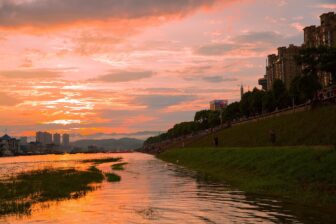
For travelers, late afternoon and sunset are ideal times to visit, when the riverfront skyline lights up and the pavilions on both banks create a striking day-to-night cityscape over the Yangtze.