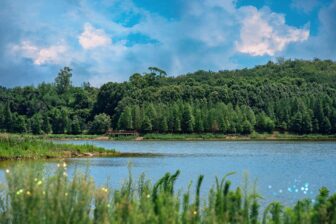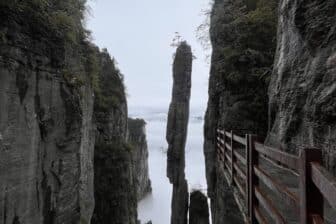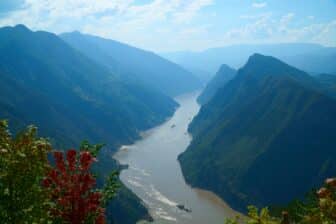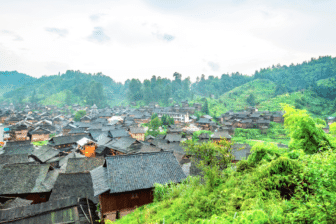


Shiyan & Wudang Mountains
Wudang Mountains – Taoist World Heritage & Internal Kung Fu
Sacred mountains in northwestern Hubei
Located near Danjiangkou in Shiyan City, the Wudang Mountains form one of China’s four great Taoist mountains. Covering about 312 km², this range is part of the Qinling–Daba system and reaches its highest point at Tianzhu Peak, at around 1,612 m above sea level.
Climate and best time to visit
Wudang has a humid subtropical monsoon climate with clear vertical climate zones:
-
- below 750 m: average temperature about 15.9 °C,
- 750–1,200 m: around 12 °C,
- 1,200–1,600 m: about 8.5 °C.
Summers are not excessively hot in the higher areas, winters can be quite cold on the peaks, and rainfall is concentrated in summer; the mountains are suitable to visit year‑round, with particularly pleasant conditions in spring and autumn.
History – From Taoist retreat to UNESCO World Heritage
Imperial patronage and Taoist development
The name “Wudang” first appears in the Book of Han, and from the late Han through the Wei, Jin, Sui and Tang dynasties the mountains became a retreat for Taoist practitioners seeking immortality.
During the Tang dynasty, Emperor Taizong ordered the construction of the Five Dragons Temple.
In the Song dynasty, worship of Zhenwu (the Perfected Warrior Emperor) flourished on Wudang, shaping a distinct Taoist tradition closely tied to the mountain.
Under the Yuan dynasty, Wudang was praised as a “Blessed Land”.
The Ming dynasty marked the peak: Emperor Chengzu (Yongle) commissioned a large‑scale building programme of imperial‑standard palaces and temples, completed in about 13 years, creating a vast, unified Taoist complex.
UNESCO World Heritage recognition
In 1994, the Ancient Building Complex in the Wudang Mountains was inscribed on the UNESCO World Heritage List for its religious significance and architectural achievement, representing nearly 1,000 years of Chinese art and architecture. Today, more than 50 ancient buildings and several archaeological sites remain, scattered across valleys, ridges and cliffs.
Scenic areas and landmark sites
Main scenic zones
The Wudang Scenic Area is commonly divided into seven major zones:
-
- Taiji Lake,
- Xuan Yue Gate,
- Prince Slope (Taizi Slope),
- Nanyan Palace,
- Zixiao (Purple Cloud) Palace,
- Golden Summit (Jinding),
- Five Dragons Palace and Qiong Terrace.
The mountains show a strong vertical vegetation pattern, with rich forest cover and high biodiversity, including hundreds of plant and animal species and over 800 medicinal plants, important for traditional Chinese medicine.
Key highlights include:
-
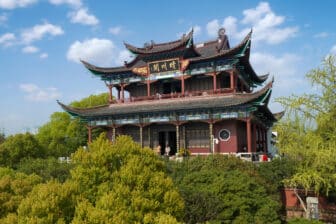
- Golden Hall / Golden Summit – located near the top of Tianzhu Peak, this gilded metal hall in wooden style is regarded as the spiritual core of Wudang, symbolising the mountain’s peak Taoist status.
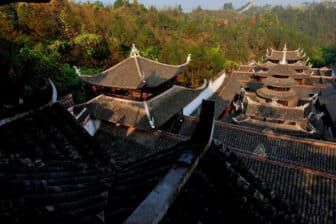
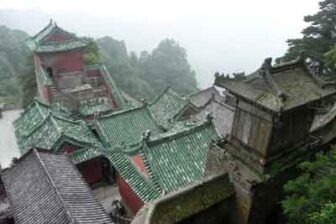
- Zixiao Palace (Purple Cloud Palace) – originally built in the 12th century and rebuilt in 1413, this is the largest and best‑preserved building complex on Wudang, with multiple terraces, halls, pavilions and courtyards aligned along a central axis.
- Nanyan Palace – dramatically set against rock cliffs, it is traditionally known as the place where Emperor Zhenwu attained enlightenment and ascended to heaven. The architecture appears to grow out of the rock, offering dramatic views over the valleys.
Taoism, ritual music and Wudang internal martial arts
Living Taoist culture
The temples and palaces of Wudang are dedicated mainly to Zhenwu and other Taoist deities.
Taoist rituals and music continue to be practised, especially in sites like Zixiao Palace, where visitors may witness ceremonies or quiet devotional life.
The entire architectural sequence follows the mythic journey of Zhenwu’s enlightenment and ascension, from lower‑level complexes up to the Golden Summit, mirroring the spiritual ascent of the practitioner.
Wudang internal kung fu
The Wudang martial arts form one of the major schools of Chinese martial arts, famed for their internal (nei jia) techniques focusing on:
-
- cultivation and flow of Qi,
- soft, circular movements,
- integration of breath, intention and posture,
- styles such as Wudang Taiji and related internal forms.
Many travellers come specifically to study or experience Wudang kung fu, join short training courses, or simply watch practitioners performing Taiji at sunrise in the temple courtyards.
Why include Wudang in your China itinerary?
The Wudang Mountains combine dramatic mountain scenery, a World Heritage Taoist temple complex, living religious traditions and legendary internal martial arts in one destination.
Easily accessible from Shiyan, they are an ideal stop for travellers seeking a deeper cultural and spiritual experience beyond the classic urban circuits.