

Yichang & the Three Gorges
Dam, Waterfalls and Culture along the Yangtze
Yichang, gateway to the Three Gorges
Short intro (2–3 sentences): present Yichang as the gateway to the Three Gorges, base for visiting the Three Gorges Dam, waterfalls, Qingjiang Gallery, Qu Yuan Temple and Sanyou Cave.
Three Gorges Dam – The world’s largest hydropower project
Location and key functions
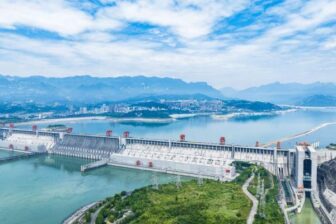
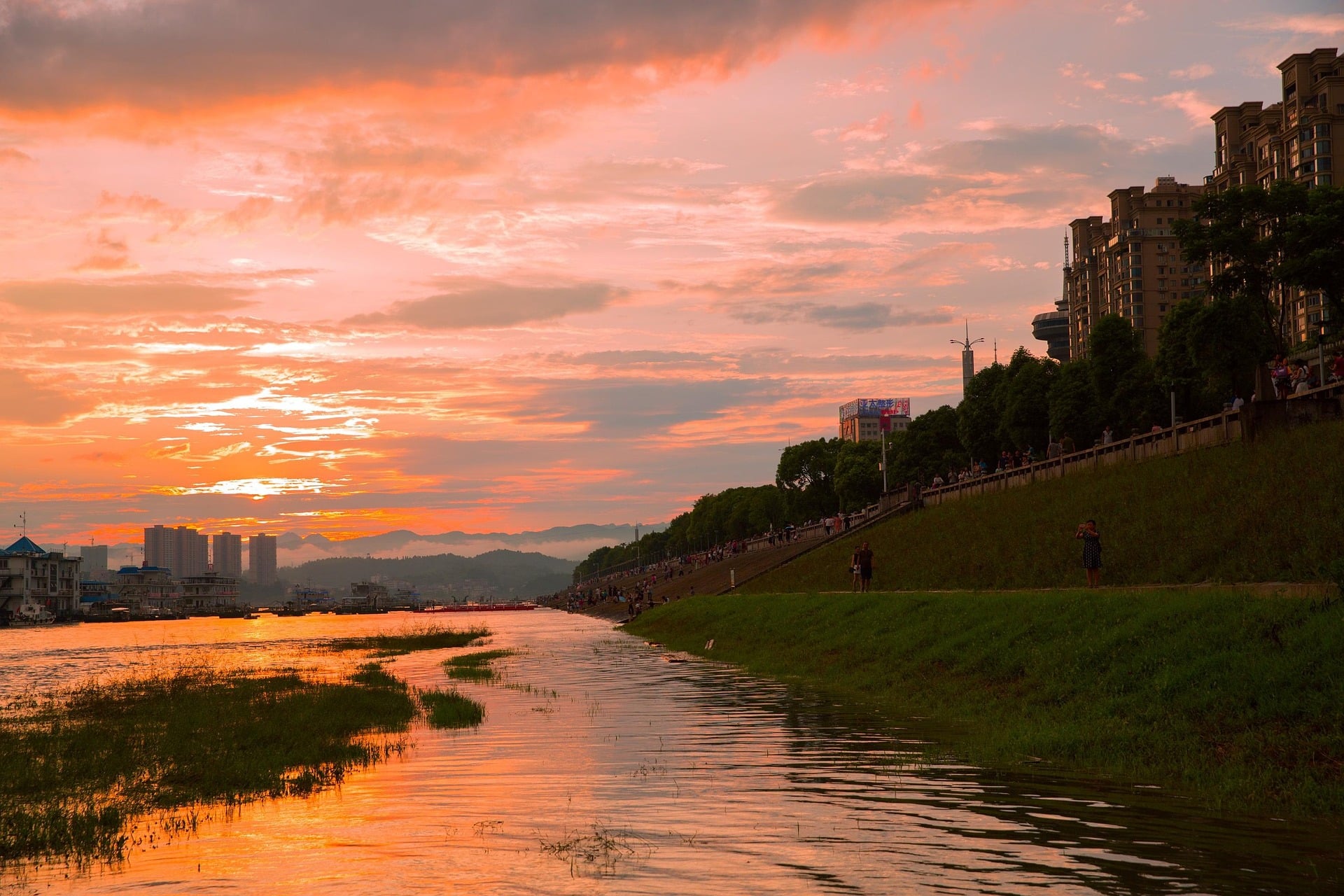
The Three Gorges Dam stands in Sandouping Town, Yiling District, Yichang, on the Xiling Gorge section of the Yangtze River, at the eastern end of the Three Gorges reservoir.
It is the largest hydroelectric project in the world, combining flood control, power generation and navigation, with additional benefits for aquaculture, tourism and ecological protection.
From Sun Yat-sen’s vision to completion
In 1918, Dr. Sun Yat-sen first proposed the idea in his National Reconstruction Program. After decades of feasibility studies, China’s National People’s Congress approved the project in 1992; construction officially started in December 1994, the main dam body was finished in 2006, the project in 2009, and final acceptance in 2020.
Visitor experience and climate
The Three Gorges Project includes:
-
- a retaining dam,
- a hydropower station,
- navigation facilities such as multi‑stage ship locks and a ship lift.
Flood control remains its most crucial function, raising flood protection standards along the middle and lower Yangtze.
The area has a humid subtropical monsoon climate with mild winters, hot summers, and most rainfall in spring and summer, average temperature around 17 °C, making it suitable to visit year‑round.
Three Gorges People Scenic Area (Sanxia Renjia)
Eco‑tourism, canyon scenery and Ba‑Chu culture
The Three Gorges People Scenic Area (Sanxia Renjia) is a large eco‑tourism zone developed over more than a decade, blending natural scenery, film‑style staging, and local Ba‑Chu and Tujia culture.
As a national 5A attraction and a core part of the Yangtze Three Gorges National Geopark, it showcases steep bays, bizarre rocks, deep valleys, karst caves and clear springs.
Highlights and “1–2–3–4” concept
Major attractions include:
-
- Longjin Stream (“Dragon Spring”),
- Yepoling,
- Dengying Cave,
- the War of Resistance Memorial,
- Shipai Ancient Town,
- Yangjiaxi rafting.
The tourism concept is summarised as “1–2–3–4”:
-
- 1 museum: Shipai Anti‑Japanese War Memorial.
- 2 flagship projects: Three Gorges People Cultural Experience, Yangjiaxi “military rafting”.
- 3 “firsts”:
- Mingyue Bay, “first bay of the Three Gorges”,
- Shipai Stone, “first sacred stone of China”,
- Dengying Rock, “first rock of the Yangtze”.
- 4th highest spring in the world – Toad Spring.
The Three Gorges People Cultural Experience features a Water Village, Stream Village, Mountain Village and Modern Village, recreating traditional Yangtze riverside life.
Climate: humid subtropical, mild winters, relatively cool summers, abundant rainfall, average temperature around 16.9 °C.
Three Gorges Grand Waterfall Scenic Area
One of the best‑preserved canyons of the Three Gorges
The Three Gorges Grand Waterfall is often described as the “most beautiful preserved canyon of the Yangtze’s Three Gorges” and was upgraded to 5A status in 2022.
Located about 29–30 km from downtown Yichang, it is a must‑stop on the way to Shennongjia.
Grand waterfall and karst landscapes
The scenic area mainly includes:
-
- the Three Gorges Grand Waterfall,
- Golden Lion Cave,
- Lovers’ Spring.
The main waterfall ranks among China’s top ten famous waterfalls, dropping 102 m over a width of 80 m, with spray and mist forming a spectacular water curtain.
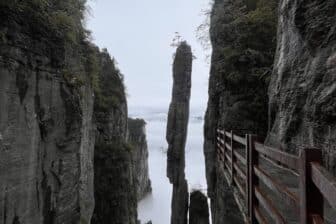
Visitors can even try the “wet crossing” behind the waterfall, and follow a trail along more than 30 cascades, surrounded by dark cliffs, narrow gorges and lush endemic vegetation.
The site doubles as a National Geopark, displaying multiple geological ages and combining canyons, karst caves, mountains and fossil culture, plus relics of Ba‑Chu culture (hanging coffins, ancient temples, weapons).
Climate: humid subtropical, hot summers, mild winters, heavy rainfall from May to August, when the waterfall is at its most impressive.
Qu Yuan Temple in Zigui
A temple honouring a great poet
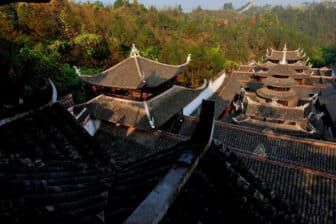
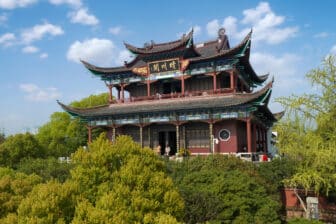
Qu Yuan Temple, also known as Qing Lie Gong Temple, stands on Phoenix Mountain (Fenghuang Shan) in Zigui County, covering about 2 hectares.
Originally built in 820 AD during the Tang dynasty, it commemorates the poet‑statesman Qu Yuan, closely associated with the Dragon Boat Festival.
Due to major dam projects, the temple was relocated twice (for Gezhouba Dam in 1976 and for the Three Gorges Project in 2006) before reopening to the public in 2010.
Steles, inscriptions and living heritage
The east and west stele corridors display:
-
- carved poems by Qu Yuan,
- calligraphic tributes by scholars of later dynasties,
- restored stone inscriptions.
Inside the complex, visitors find a thousand‑year‑old dwarf tree bearing the words “Qiu Suo” (“Seeking Truth”) and a bronze statue of Qu Yuan framed by stele galleries. Recent works (2023–2025) focus on restoration and new cultural events, including Dragon Boat Festival ceremonies and international dragon boat races.
The temple is:
-
- a National Key Cultural Relic Protection Unit since 2006,
- part of the Hubei Cultural Heritage Parks since 2022,
- listed among the “Top 30 New Tourist Attractions” of the Three Gorges since 2015.
Climate: humid subtropical monsoon, four distinct seasons, average temperature around 17 °C, suitable for visits all year round.
Qingjiang Gallery Scenic Area
Qingjiang River landscapes and Tujia traditions
The Qingjiang Gallery Scenic Area lies in Changyang Tujia Autonomous County, Yichang, and covers around 120 km².
As a 5A scenic area, it blends mountain landscapes, Qingjiang River ecology, and Tujia & Ba culture, extending from Reflection Gorge and Geheyan Dam in the east to Salt Basin Hot Springs and Shuibuya Dam in the west.
Located where the eastern edge of the Yunnan–Guizhou Plateau meets the plains, the region is characterised by steep mountains, deep valleys, and classic karst landforms (sinkholes, depressions).
Ba homeland and “three treasures” of Tujia culture
This area is the homeland of the ancient Changyang Man, the cradle of Ba culture and a key region of Tujia ethnic heritage.
The Changyang folk songs, Nanyu opera and Bashan dance are known as the “three treasures” of Tujia culture, while Sanye’erhe and the grass‑harvest drum and gong are recognised as national intangible cultural heritage.
Changyang also served as a revolutionary base, where He Long established a Red Army base and launched the Xiwang Uprising.
Key scenic spots and themed routes
The three main attractions are:
-
- Reflection Gorge, named for the mirror‑like mountain reflections in the river,
- Immortal Village, with many caves, oddly shaped rocks and a large population of macaques,
- Wuluo Zhongli Mountain, birthplace of Linjun, legendary ancestor of the Ba people, rich in Ba cultural relics.
The area offers themed experiences:
-
- “Hometown of the Ba People, Cradle of the Tujia” sacred route,
- “Shadow Landscapes, Spiritual Paradise” nature route,
- red culture itineraries,
- outdoor eco‑tourism and sports routes.
The original folk show “Hua Dong Dong De Jie” highlights Tujia songs and dances against a natural backdrop.
Climate: subtropical monsoon, mild winters, cool summers, abundant rainfall, average temperature around 17 °C, pleasant year‑round.
Sanyou Cave – Poetry, karst and cliffside views
A cave praised by famous poets
Sanyou Cave, also known as the Sanyou Cliff Inscriptions, is a national 4A site and part of China’s National Key Cultural Relic units.
It sits on a cliff about 7 km northwest of Yichang, along the Yangtze River, at the entrance to Xiling Gorge.
In 819 AD, poets Bai Juyi, Bai Xingjian and Yuan Zhen visited together, each composing a poem; Bai Juyi’s “Preface to Sanyou Cave” gave the site its name (“Three First Visitors”). Later, Song‑dynasty writers Su Xun, Su Shi and Su Zhe visited and carved poems, known as the “Three Later Visitors”.
Karst chamber and cliff inscriptions
Formed in Cambrian limestone, the cave is about 30 m deep, 23 m wide and 9 m high, with three stalactite pillars dividing it into a front and back chamber.
The domed ceiling of the back chamber echoes like a bell and drum when stones are thrown, inspiring the phrase “Heavenly bell and earth drum”.
Inside and outside the cave, visitors can still see more than 40 cliff inscriptions and steles, including works by Ouyang Xiu and a Ming‑dynasty re‑engraving of Bai Juyi’s preface.
Below the cave flows the clear Xi Lao Stream; a path leads to Xiting Pavilion overlooking the Yangtze, and halfway up, Lu You Spring emerges from a cliff where the Song poet Lu You once brewed tea and carved a poem.
The cave also served as a clandestine communication centre for the CPC during the Agrarian Revolutionary War.
Climate: humid subtropical, hot summers, mild winters, abundant rainfall, average temperature around 17 °C, accessible year‑round.
Yichang Museum – Window into Ba‑Chu history
National first‑class museum in Wujia Gang
The Yichang Museum, located on Qiushou Road in Wujia Gang District, is a national first‑class museum and a 4A tourist attraction.
Founded in 1980, it merged with the local heritage administration in 1992 and moved into a new main building in 2019; it was officially recognised as a national first‑class museum in 2020.
With 43,001 m² of built area and 15,247 m² of exhibition space, its design incorporates Ba‑Chu cultural motifs and the artistic concept of “Chu Phoenix Harmony”.
Collections and signature pieces
The museum holds around 59,110 items, including about 2,295 precious relics such as bronzes, ceramics, jades and lacquerware.
Highlights include the Beiming bell of the Qin king, the Chu Ji Treasure Bell, and the Changyang Man fossil, offering insight into regional prehistory and Ba‑Chu civilisation.
Climate: humid subtropical, with hot summers, mild winters, rainfall concentrated in spring and summer, average temperature around 17 °C, making it easy to visit in any season.